Your guild started with a Discord server, a Google Sheet, and good intentions. That setup worked when you had 15 members running casual content. But somewhere between 30 and 100 members, things started breaking. The spreadsheet has 47 tabs. Three officers manage three different tracking systems. New members ask "how does loot work here?" and nobody gives the same answer twice.
If any of that sounds familiar, your guild has outgrown its current tools. Here are five clear signs it's time to upgrade — and what to do about each one.
Sign 1: Officers Spend More Time Tracking Than Playing
This is the most common and most damaging sign. Your officers joined the guild to play the game, not to maintain spreadsheets. But somewhere along the way, their role shifted from "player who helps manage" to "unpaid data entry clerk."
What it looks like:
- The loot officer spends 30+ minutes after every raid updating the DKP spreadsheet
- The raid leader tabs out of the game during boss fights to log attendance
- An officer manually copies boss kill times into a tracking sheet, converts timezones, and posts reminders by hand
- Someone spends Sunday afternoons reconciling point discrepancies that accumulated during the week
Why it matters: Officer burnout is the number one killer of organized guilds. When your best, most dedicated players quit because the administrative burden is crushing, the guild follows shortly after.
The fix: Automate data entry. Boss kills should be logged with one click. Attendance should tie directly to point calculations. Loot transactions should happen in a marketplace, not a spreadsheet. Every minute an officer spends on administration is a minute they're not playing — or a minute closer to quitting.
Sign 2: Loot Disputes Are Increasing
A loot argument every few months is normal. Loot arguments every week means your distribution system has broken down.
What it looks like:
- Players challenge DKP totals because they don't trust the tracking
- "I was there for that kill" disputes happen regularly because attendance records are incomplete
- Officers make loot council decisions and get accused of favoritism
- Members screenshot their own point calculations to "prove" the official numbers are wrong
- The phrase "that's not fair" appears in guild chat more than once a week
Why it matters: Trust is the foundation of any guild. When members don't trust the loot system, they don't trust leadership, and they start looking for a new guild. You'll lose your best-geared players to guilds with transparent systems.
The fix: Move to a system with a complete, immutable audit trail. Every point earned, every point spent, every transaction — logged and visible to all members. When a player questions their balance, you point them to the ledger. No he-said-she-said, no screenshots, no arguments. Tools like Raidium log every point change with timestamps, sources, and reasons.
Sign 3: Members Are Missing Boss Spawns
Boss kills are the core activity for many guilds. When members start missing spawns they should have caught, your notification system has failed.
What it looks like:
- A boss spawns and only 3 out of 20 online members show up because nobody posted a reminder
- Members in different timezones consistently miss spawns because they calculated the wrong local time
- The officer responsible for posting spawn times forgot, was asleep, or was at work
- Your guild missed a contested world boss because the alert went out 2 minutes before the spawn instead of 30 minutes
Why it matters: Missed bosses mean missed loot, missed points, and missed guild progression. For competitive guilds, one missed world boss can set you back weeks. Even for casual guilds, low turnout for bosses signals declining engagement.
The fix: Automated, timezone-aware reminders that fire at consistent intervals before every spawn. No human should need to remember to post a reminder — the system should handle it. Raidium sends Discord webhook reminders on a self-scheduling chain, so even if a reminder is missed due to downtime, it catches up automatically.
Sign 4: New Members Are Confused About How Things Work
Your guild has systems and processes — but they exist in the heads of three officers and a Discord channel nobody can find.
What it looks like:
- New members ask "how do points work?" and get three different answers from three officers
- The onboarding process is "read the pins in #rules" — but the pins are 18 months old and half the rules have changed
- New members don't know how to request items, check their point balance, or sign up for raids
- Veterans gatekeep information without realizing it: "everyone knows you need 500 points for a Tier 1 item" — except the ten people who joined last month
Why it matters: High friction for new members means high churn. If someone joins your guild and can't figure out how things work within their first week, they leave. Recruitment is expensive in time and effort — losing members to poor onboarding is a waste.
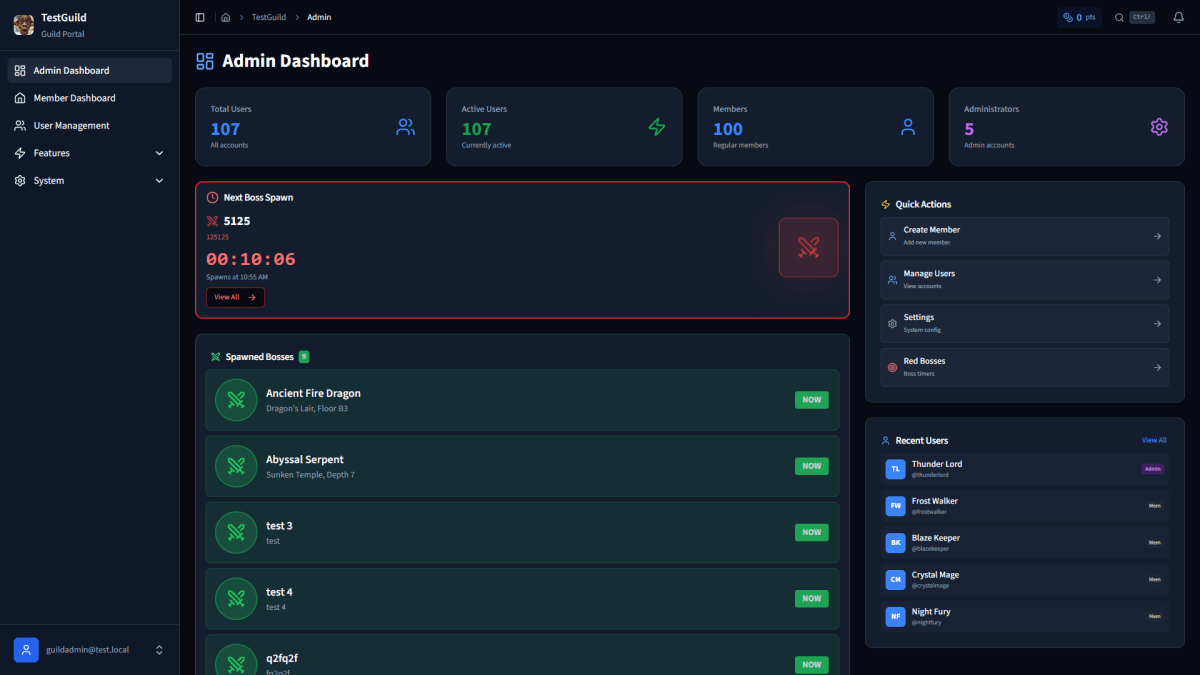
The fix: Centralize everything in one platform with self-service access. Members should be able to check their points, browse the marketplace, see upcoming boss spawns, and submit requests without asking an officer for help. When the system is the documentation, you don't need a wiki that nobody maintains.
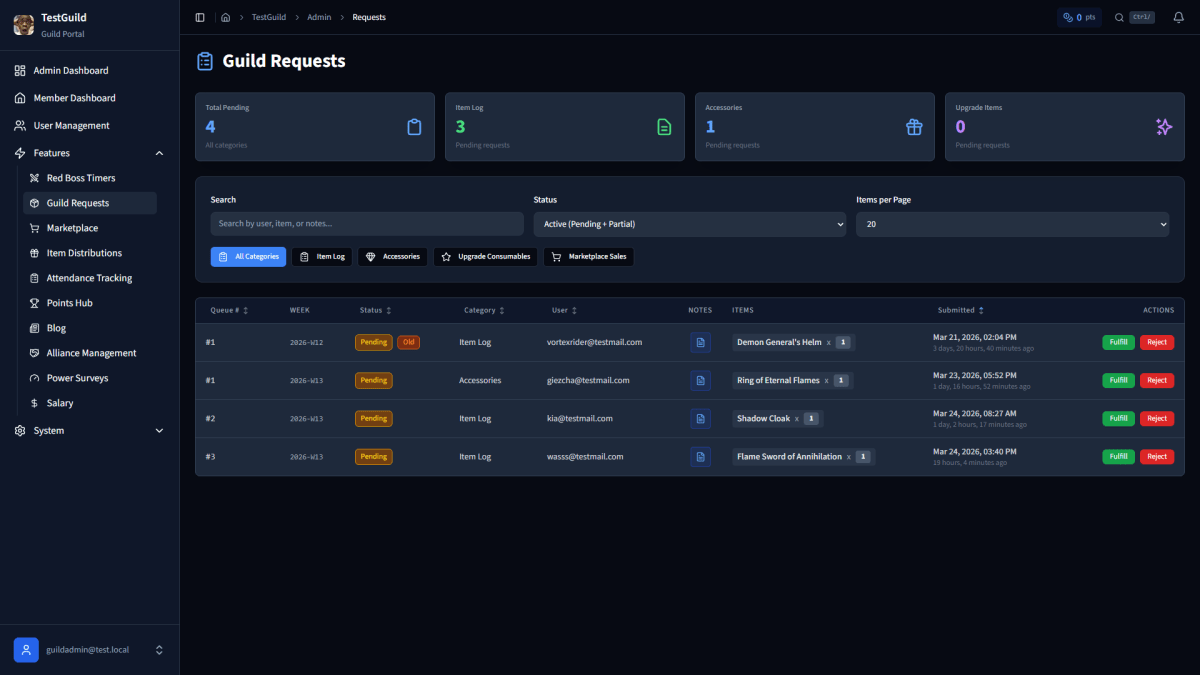
Sign 5: Your Data Lives in Multiple Disconnected Places
This is the structural problem behind all the other signs. When your guild's data is scattered across platforms, nothing works well.
What it looks like:
- Boss tracking is in one spreadsheet, DKP in another, attendance in a third
- Loot history lives in Discord messages that disappear into the void after a few days
- Point calculations require cross-referencing the attendance sheet with the boss kill log and the DKP ledger
- An officer needs 20 minutes and three browser tabs to answer "how many points does PlayerX have?"
- Historical data is incomplete because different officers tracked things differently over time
Why it matters: Disconnected data creates inconsistencies, increases manual work, and makes reporting impossible. You can't see the big picture when the picture is spread across five different tools.
The fix: Consolidate into one system where attendance feeds into points, points feed into the marketplace, boss kills tie to attendance records, and everything is queryable from a single dashboard. This isn't about replacing Discord — it's about giving your data a proper home instead of scattering it across spreadsheets and pinned messages.
The Tipping Point
Most guilds hit this wall between 30 and 80 active members. Below 30, manual processes are annoying but manageable. Above 80, you've either automated or you've already split into factions that do things differently.
The 30-80 range is where guilds either level up their operations or stagnate. The guilds that upgrade their tools during this growth phase build the infrastructure for long-term success. The guilds that don't spend all their energy fighting administrative fires instead of actually playing the game.
What "Upgrading" Actually Means
Upgrading your guild tools doesn't mean buying expensive software or hiring a developer. It means moving from disconnected manual processes to an integrated system that:
- Tracks boss kills and calculates spawn timers without officer intervention
- Records attendance and calculates points automatically
- Provides a marketplace where members spend earned points transparently
- Sends reminders through Discord without anyone needing to remember
- Gives every member a dashboard where they can check their own data
- Maintains a complete audit trail so disputes are resolved by data, not arguments
Raidium was built specifically for this transition — it's a purpose-built guild management platform that replaces the spreadsheet-and-Discord-pins workflow with automated, integrated tools. But whatever solution you choose, the principle is the same: stop spending officer hours on work that software should handle.
When to Make the Switch
You don't need all five signs to justify upgrading. If even two of these resonate, you're past the point where manual tools serve you well. The longer you wait, the more officer energy gets burned on administration, the more members you lose to frustration, and the harder the eventual migration becomes.
The best time to upgrade was when you first noticed the problems. The second best time is now.